System Maintenance
✅ Completed
Smoke Testing Complete
Smoke testing in the Blacksburg area has been successfully completed. We’d like to thank our customers for their patience and cooperation during this process. These tests are an important part of maintaining our system and identifying areas in need of repair, and we appreciate your understanding while the work was underway.
Smoke Testing: What Homeowners Need to Know
Smoke testing helps identify where rain or surface water may be entering the sanitary sewer system. Reducing inflow can help prevent backups, overflows, and higher treatment costs.
Smoke testing is the industry-standard method used to identify sources of surface inflow to the sanitary sewer system, which can reduce the efficiency of sewer treatment plants.
Crews use non-toxic smoke and high-capacity blowers to push smoke through sanitary sewer lines. Smoke appearing where it shouldn’t (ground, drains, etc.) can indicate locations where surface water may be entering the system. Crews document and mark locations for repair.
Good to know: The testing smoke is non-toxic, leaves no residue, and is used only to locate faults.
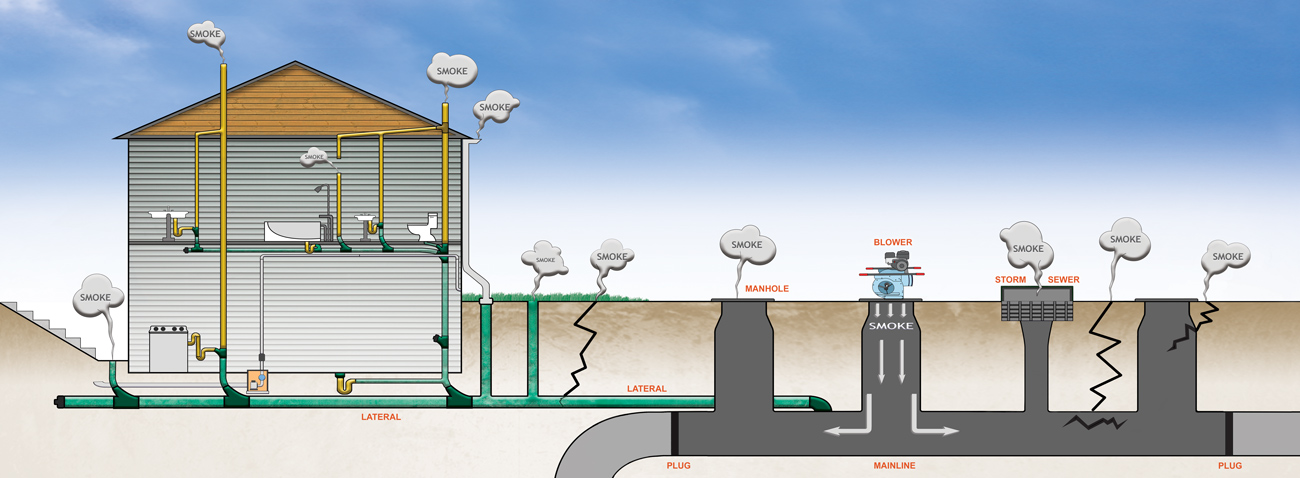
- Roof downspouts
- Unconnected sewer lines
- Abandoned sewer lines
- Leaking manholes
- Cross connected storm drains
- Broken laterals or mains
- Cross connected sanitary lines
- Cellar drains
- Yard / foundation drains
- Sump pumps
Frequently Asked Questions
Common questions homeowners have about sewer smoke testing.
✅ How should I prepare for a Smoke Test? ›
Prior to the testing date, pour ½ gallon of water in all basement floor drains or seldom-used sink/shower drains and be sure to flush any seldom-used toilets.
This ensures drain traps are filled with water so smoke will not enter the house through normal, working sewer-line connections. This is commonly called “filling your traps.”
🏠 Do I need to be home during a Smoke Test? ›
No, homeowners do not need to be home during testing. Do not leave pets unattended in a confined space.
ℹ️ How will I know if smoke enters my house if I am not home during testing? ›
The purpose of sewer smoke testing is to identify improper sources of water entering the public portion of the sewer system. While it can also reveal deficient plumbing connections on private property, that is not the main intent of the testing. Homeowners are responsible for maintaining plumbing on private property.
💨 Will Smoke Testing allow smoke to get into my house? ›
No—if your plumbing is correctly installed and functioning properly, and your traps are filled with water, smoke should not enter your home. Very few homes typically get smoke in them from sewer smoke testing.
⚠️ What does it mean if smoke is in my house? What should I do? ›
If all sewer connections are working properly and there are no open faults in the home, smoke should travel through the sewer lines and out the building’s roof vents. This is normal.
Smoke entering the home usually indicates an open fault where sewer gas has been entering the home for months or years. Sewer gas is poisonous and dangerous, while the test smoke is harmless and leaves no residue—it simply helps locate open faults.
If smoke enters your home, open doors and windows and leave the house until it dissipates (typically 20–30 minutes). Notify a member of the smoke testing crew working in your area so the fault can be identified. Then contact a licensed plumber and repair the fault as soon as possible.
- Inadequate, defective, or improperly installed vent pipes
- Dry, defective, or improperly installed traps and seals under sinks, showers, tubs, toilets, and other drains
- Damaged, missing, or improperly installed pipes, connections, or seals in the wastewater drainage system
🚪 If the smoke is harmless, why is it recommended to evacuate? ›
This is a precaution in case smoke is due to a real fire rather than testing. Smoke entering the home can also indicate that dangerous sewer gases are present. Although the testing smoke is non-toxic, dense smoke or prolonged exposure can be irritating—so it’s best to minimize exposure.
🚨 Can the Smoke Test activate smoke alarms? ›
Yes, smoke alarms may be activated by testing. Open windows or doors for ventilation if possible.
🌿 What does it mean if smoke is in my yard or driveway? ›
This could mean a drain on the property is connected to the sewer lateral, or the lateral has breaks or cracks that allow runoff to enter the sewer system—contributing to backups and overflow.
🧪 Is the smoke hazardous? ›
No. The smoke is non-toxic and harmless. It is light in color, leaves no residue, and does not create a fire hazard. People with particular respiratory sensitivity should avoid exposure to all types of smoke.
Hydrant Maintenance
The Board of Public Works (BPW) regularly performs routine fire hydrant maintenance to ensure all hydrants are operating properly and ready for emergency use. This work may include flushing hydrants, checking water flow and pressure, and inspecting equipment for repairs or replacement.
During maintenance, customers in the area may temporarily notice discolored water or slight pressure changes. This is normal and typically clears after running cold water for a few minutes.
This Week’s Hydrant Maintenance Areas:
BPW has no Weekly Maintenance Areas to report.
If you experience prolonged discoloration or pressure issues after hydrant maintenance, please contact BPW for assistance.
BPW has no scheduled shutdowns to report.
Advisories
BPW has no active Boil Water Advisories or wastewater issues to report.
BPW has no wastewater issues to report.